
Rodents - Identification, Risks & Prevention on the Central Coast
Rodents are a common pest across the Central Coast, particularly in the cooler months when they move indoors seeking warmth and food. Urban and coastal environments provide ideal conditions, easy access to shelter, water, and scraps, making homes, garages, sheds, and roof voids attractive nesting sites.
While rats and mice are the most common offenders, the damage they cause goes well beyond a few scattered droppings. Rodents contaminate food, chew through insulation and electrical wiring, and pose serious health risks through their urine and faeces.
Identifying the problem early and acting quickly is key to preventing a full infestation.
Enquire Now
COMMON RODENT SPECIES ON THE CENTRAL COAST
Several rodent species are active across the Central Coast. Each has different habits, nesting behaviours, and risks. Correct identification helps determine the best approach for control.
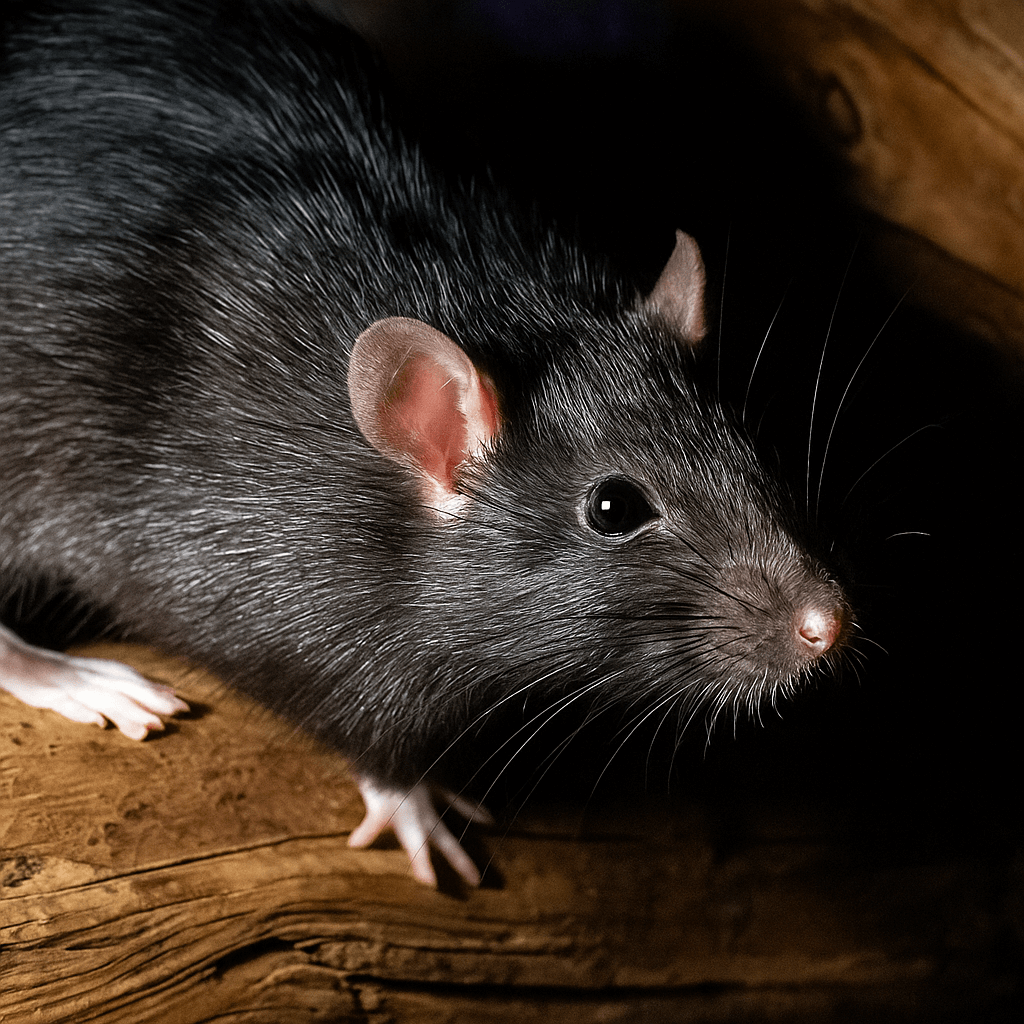
Black Rats (Roof Rats)
Agile and fast-moving, black rats are excellent climbers. They often nest in roof voids, wall cavities, or trees near buildings. You’re more likely to hear them scratching in the ceiling than see them during the day.
Key Characteristics:
- Sleek body with a pointed nose and large ears
- Tail longer than their body
- Agile climbers—nest in roof voids, wall cavities, and trees
- Active at night—often heard before they are seen
- Prefer high places and rarely burrow
Brown Rats (Norway Rats)
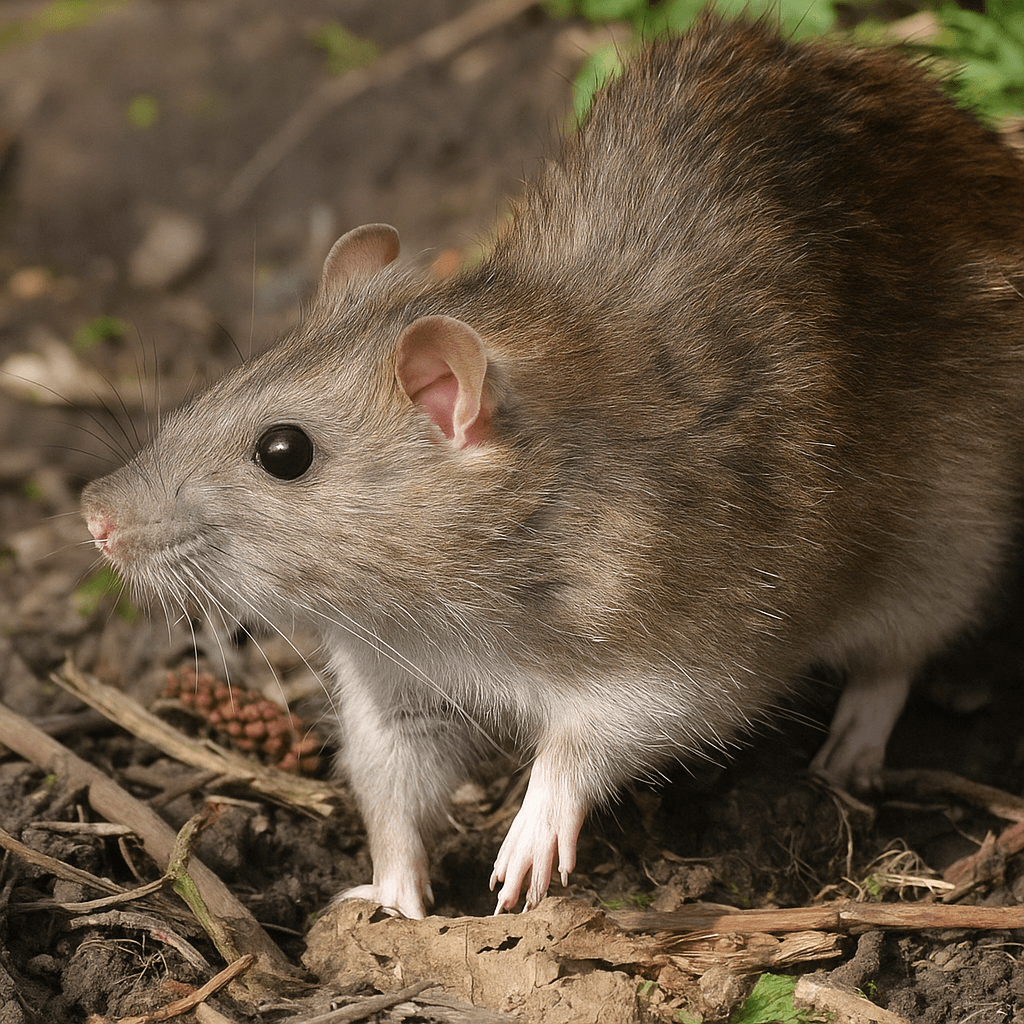
Heavier and more ground-dwelling than black rats, brown rats are found around sheds, under buildings, and near stormwater drains. They create burrows and can cause structural damage through gnawing.
Key Characteristics:
- Stocky body with a blunt nose and small ears
- Tail shorter than their body
- Ground dwellers—nest under buildings, in drains or burrows
- Strong gnawing ability—can damage timber, pipes, and insulation
- Thrive around human activity and waste sources
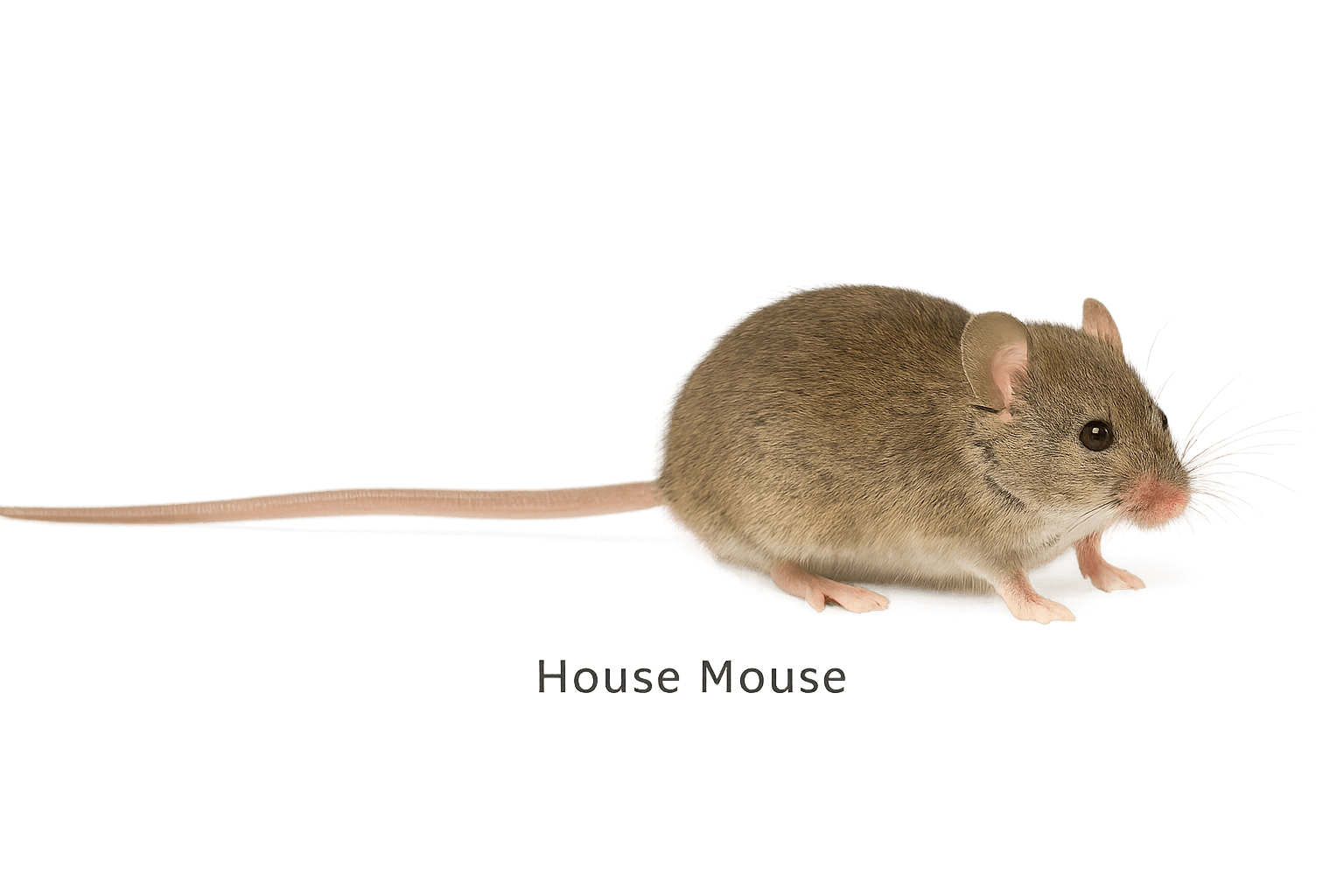
House Mice
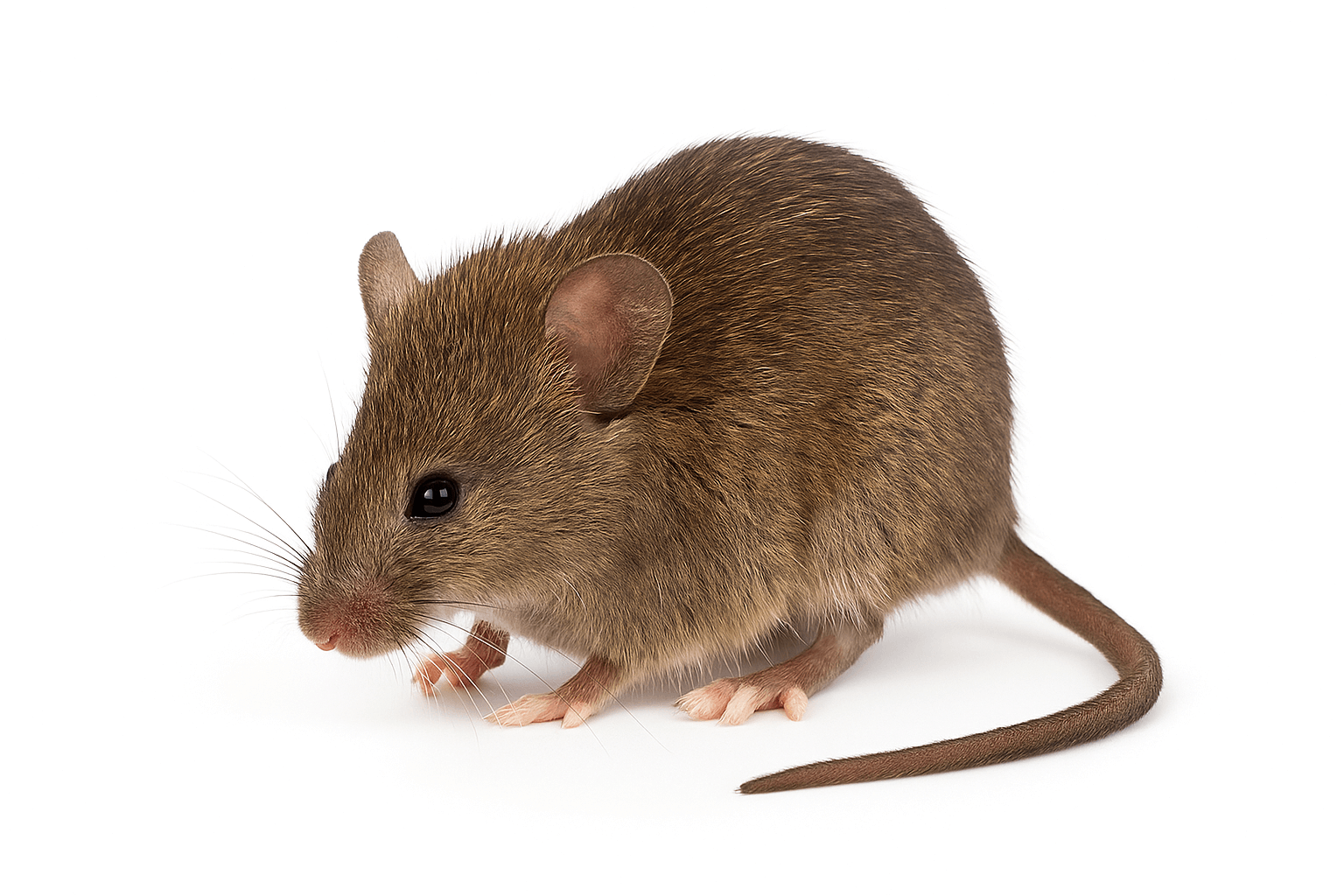
Small and discreet, house mice are known for squeezing through tiny gaps. They often nest in pantries, behind appliances, or inside wall cavities. Despite their size, they can cause significant damage by chewing wires, plastic, and food packaging.
Key Characteristics:
- Small body with large ears and a long, thin tail
- Excellent at squeezing through tight gaps
- Nest indoors—in pantries, behind fridges, inside walls
- Known for chewing electrical wires and plastic
- Breed rapidly—infestations can grow fast
Swamp Rats
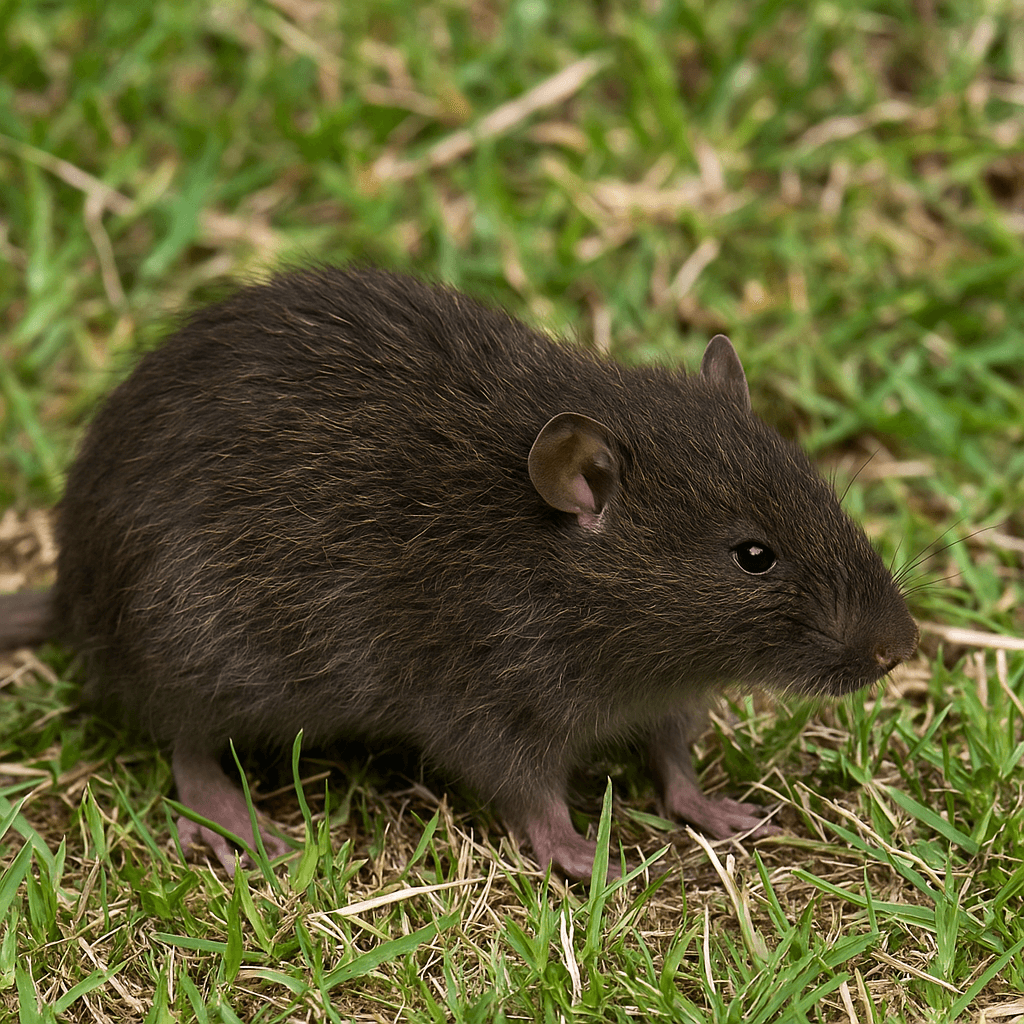
A native species found in wetland and bushland areas. While less likely to invade homes, they may appear on properties bordering nature reserves or creeks.
Key Characteristics:
- Sturdy body with coarse, dark brown fur
- Shorter tail and smaller ears compared to other rats
- Native to wetland and bushland areas
- Less common indoors—appear near creeks or dense vegetation
- Tend to burrow in moist soil or grassed areas
Key Differences of Rats vs Mice
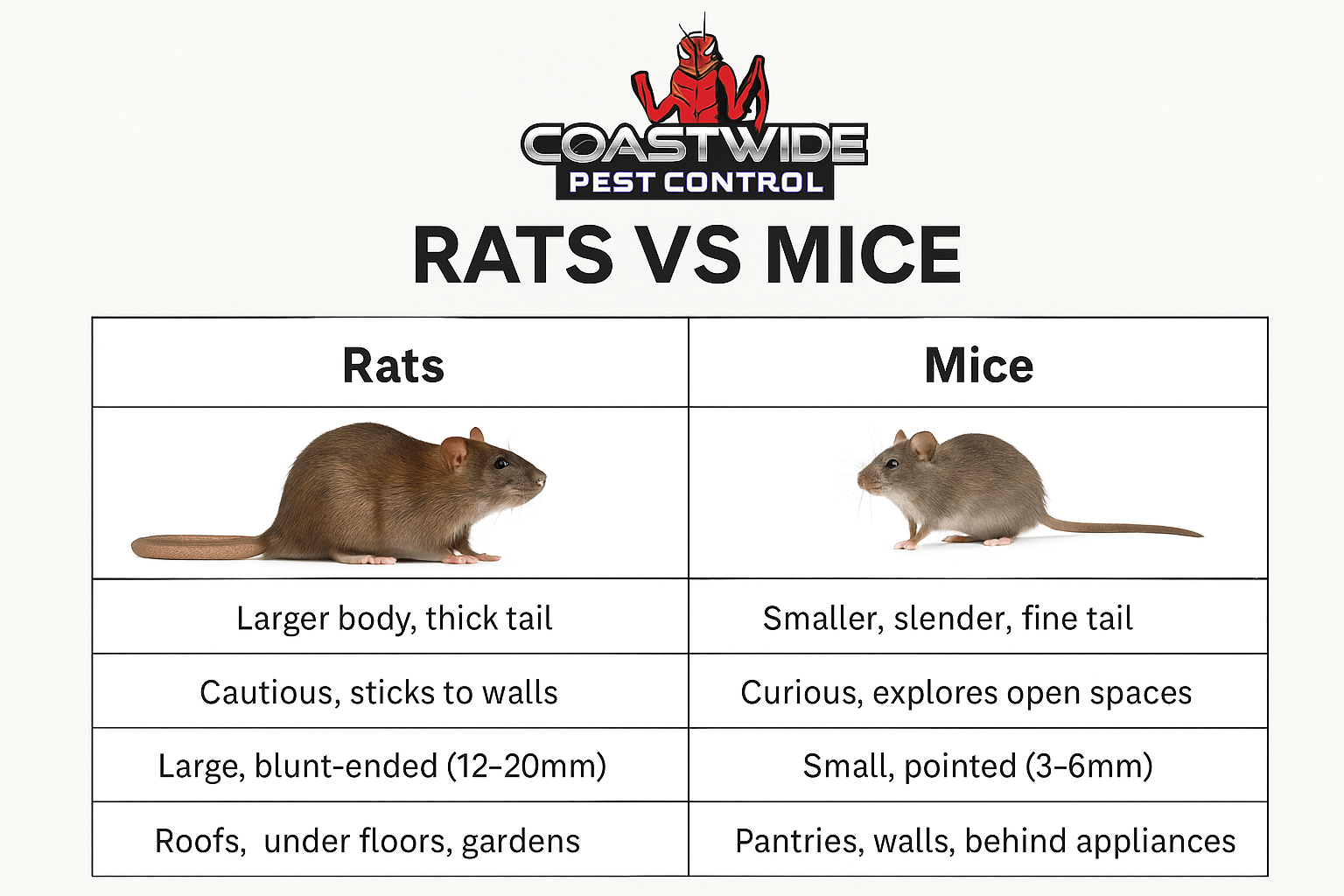
While both are common household pests, rats and mice behave differently, pose different risks, and require different control strategies. Accurately identifying which one you’re dealing with can help avoid wasted time on the wrong treatment. The table below outlines the key differences between the two.
Signs of a Rodent Problem
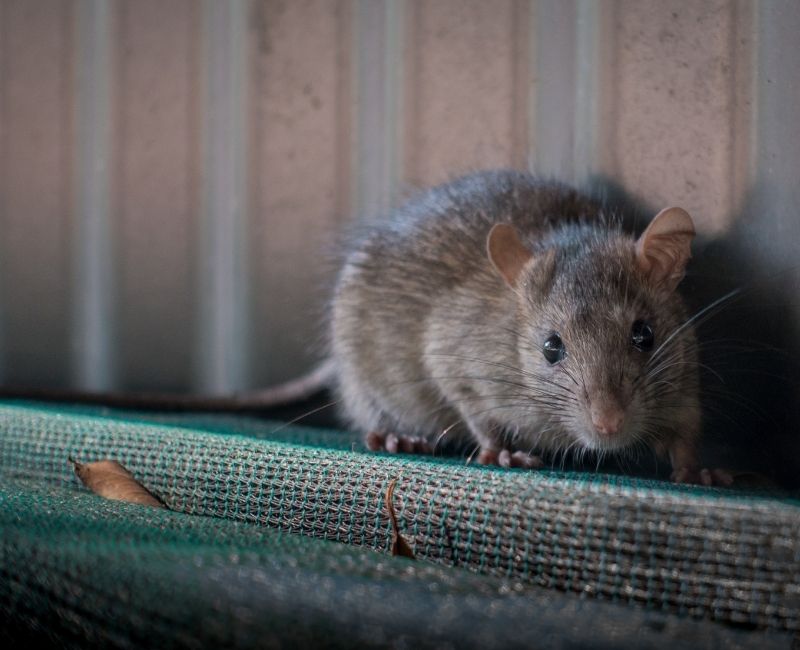
Rodents are often active at night, which means the first signs are usually indirect. Common indicators include:
- Gnaw marks on packaging, electrical cables, skirting boards, or furniture.
- Droppings in cupboards, drawers, under sinks, or along wall edges.
- Scratching or scurrying sounds from walls, ceilings, or roof spaces—usually at night.
- Nests made from shredded paper, fabric, or insulation, often in dark, sheltered areas.
- Unusual pet behaviour, such as dogs barking at walls or cats watching ceilings.

Why Rodents Are a Problem
Rodents aren’t just an inconvenience, they can pose serious risks to your health, safety, and property. If left untreated, even a small rodent issue can escalate quickly. Here’s what makes them a real problem:
Rodent Prevention Tips
Preventing rodents starts with making your home less attractive and accessible:
Rodent Control Methods
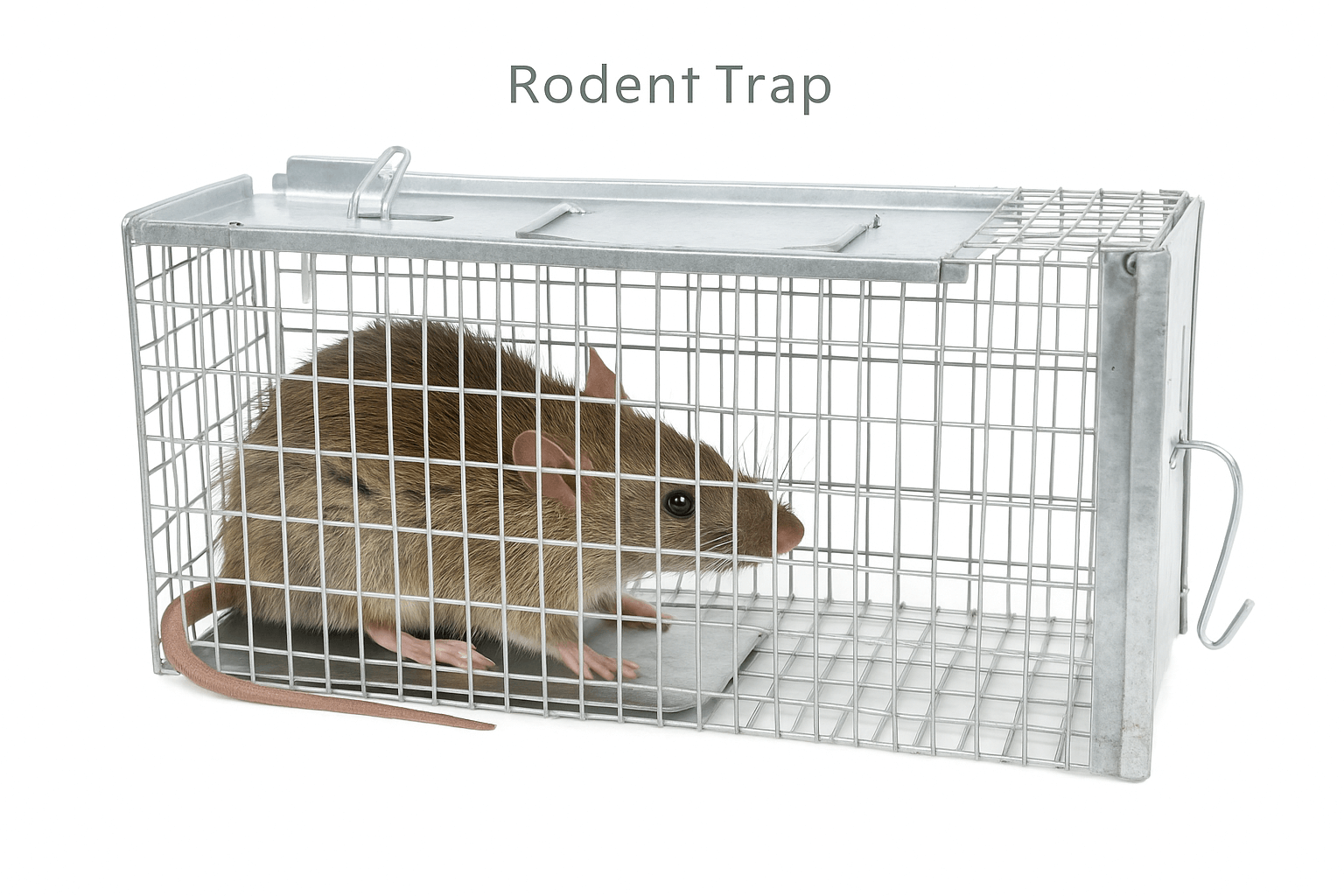
If prevention isn’t enough, control measures should be safe, targeted, and based on the extent of the infestation.
When to Call a Professional
If you’ve noticed multiple signs of rodent activity or if DIY traps and baits haven’t resolved the problem, it’s time to speak with a professional.
At Coastwide Pest Control, we identify the species, locate entry points and nesting sites, and apply safe, effective treatment plans suited to your property. We also help you prevent future infestations by addressing what’s attracting them in the first place.