
Why Ants Are So Bad on the Central Coast This March
What Can you Do About Ant Infestations this March?
If it feels like ants are everywhere right now, you’re not imagining it.
Across the Central Coast this March, we’ve seen a sharp increase in ant activity. Homes, businesses, outdoor areas, even inside bird cages and pantries. They’re turning up in places they normally wouldn’t.
There’s a reason for it, and it comes down to the weather we’ve had.
The Perfect Storm for Ant Activity
This season has created ideal breeding and foraging conditions for ants.
We’ve had a mix of:
- Extended heat
- High humidity
- Consistent rainfall
- Warm nights
That combination accelerates ant colony growth and pushes them to expand quickly.
Ants thrive in moist soil, and when the ground stays damp while temperatures remain warm, colonies don’t slow down like they normally would heading into autumn. Instead, they keep growing.
At the same time, heavy rain can flood nests, forcing ants to relocate. That’s when they start moving into homes, wall cavities, roofs, and outdoor structures.
Why You’re Seeing Ants Indoors
Ants aren’t just randomly wandering inside. They’re actively searching for three things:
- Food
- Water
- Shelter
This weather has disrupted their normal patterns, so they’re becoming more aggressive in their search.
Common reasons they’re entering homes right now include:
- Wet soil pushing them out of garden beds
- Easy access to water sources like sinks, pet bowls, and condensation
- Food sources such as crumbs, sugar, pantry items, and even bird seed
- Structural entry points like cracks, gaps, and weep holes
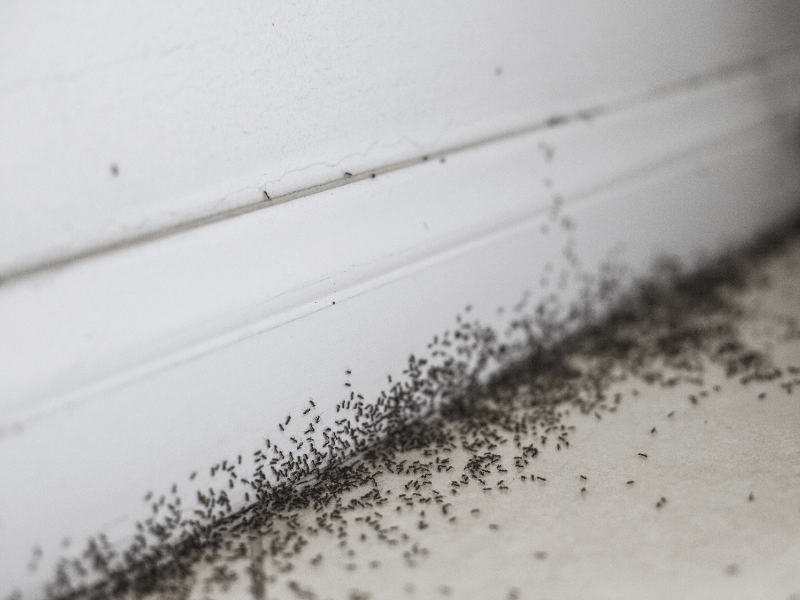
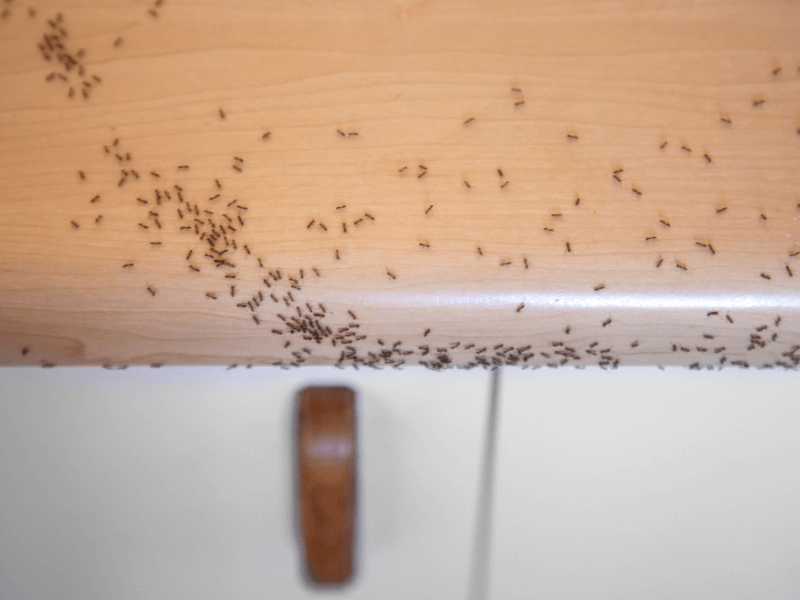
Once one ant finds a food source, it leaves a scent trail. That’s why you suddenly see a full line of ants appear out of nowhere.
Why It Feels Worse Than Usual
A typical summer sees ant activity peak and then taper off. This year hasn’t followed that pattern. Because the humidity and warmth have continued well into March, colonies are:
- Larger than usual
- More active than usual
- Spreading faster than usual
Instead of slowing down, they’re still in growth mode.
Common Problem Areas We’re Seeing
On the Central Coast right now, ants are showing up in places like:
- Kitchens and pantries
- Bathrooms and laundries
- Roof voids and wall cavities
- Outdoor entertaining areas
- Pool surrounds and decking
- Pet areas and bird cages
If there’s moisture or food involved, ants will find it.
Quick Things You Can Do Right Now
As frustrating as it is dealing with ants every day, there are a few simple things you can do to help reduce activity around your home.
It’s important to understand these steps won’t eliminate the problem completely, especially if there’s an established colony nearby, but they can make a noticeable difference.
Here are some practical ways to slow them down:
These steps can slow them down, but they won’t eliminate the colony.
Why Ants Keep Coming Back
This is where most people get frustrated. You can kill the ants you see, but unless the nest is treated, the colony is still active. Ant colonies can contain thousands of ants, including queens that continue producing more.
Surface sprays:
- Kill visible ants
- Do not reach the nest
- Often cause colonies to split and spread
That’s why infestations seem to return quickly. In many cases, proper ant control on the Central Coast is needed to target the colony, not just the surface activity.
When It’s Time to Call Coastwide Pest Control
There’s a point where it stops being a quick fix and starts becoming a constant frustration.
If you’re wiping them away every day, only to see them come back…
If they’re popping up in different areas of the house…
If you’re finding them in walls, cupboards, or places they shouldn’t be…
Or they’re getting into food and living spaces…
That’s usually when the problem is bigger than what you can see.
At that stage, it’s not just a few ants. It’s an active colony nearby that keeps sending more.
This is where we come in.
At Coastwide Pest Control, we don’t just treat the ants you can see. We focus on finding where they’re coming from, targeting the colony, and stopping the cycle so they don’t keep returning.
With the kind of heat, humidity and wet weather we’ve had this March on the Central Coast, we’re seeing infestations build faster and spread further than usual. Acting early makes a big difference.
If you’re over dealing with it, we’re here to help.
Will Ant Problems Settle Down in April?
As we move further into autumn, things should start to ease, though on the Central Coast, extended warm seasons like this can push ant activity further into April than usual.
As we get deeper into April and Autumn, cooler temperatures and drier conditions naturally slow ant activity, which usually means fewer ants around homes and outdoor areas.
But if the warm, humid weather continues, the problem can carry on longer than expected. When conditions stay mild, colonies don’t slow down as quickly and can remain active well into autumn.
Final Thoughts
This March has created near perfect conditions for ants across the Central Coast. That’s why so many people are suddenly dealing with infestations at the same time.
If you’re seeing more ants than usual, it’s not just your property. It’s happening across the region.
The key is acting early, managing what you can, and knowing when the problem needs proper treatment.